
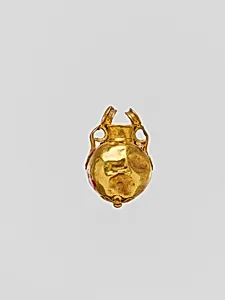
Gold pendant in the form of a vase
Unknown Artist
late 6th–5th century BCE
Medium
Gold
Dimensions
Other: 9/16 in. (1.4 cm)
Classification
Gold and Silver
Culture & Period
Greek or Cypriot · Classical
Department
Greek and Roman Art
Museum
Metropolitan Museum of Art, New York, NY
Credit
The Cesnola Collection, Purchased by subscription, 1874–76
Accession Number
74.51.3626
Rights
Public Domain
Art Historical Context
This exquisite gold pendant, shaped like a slender vase, hails from the late 6th to 5th century BCE bridging the Archaic and early Classical periods of ancient Greek or Cypriot culture. Measuring just 9/16 inch (1.4 cm) tall, its diminutive size belies the remarkable skill of its unknown artisan, who crafted it from pure gold—a precious metal symbolizing wealth and status in antiquity. Likely worn as jewelry around the neck or pinned to clothing, it reflects the era's fascination with personal adornments that evoked everyday vessels used in rituals, symposia, or household life. The pendant's form highlights the technical prowess of ancient goldsmiths, who hammered and shaped the soft metal into a lifelike vase silhouette, possibly using repoussé techniques common in Mediterranean workshops. In Greek and Cypriot societies, such objects blended functionality with artistry, serving as talismans or status symbols amid burgeoning trade networks across the Aegean and Eastern Mediterranean. Its presence in the Metropolitan Museum of Art's Cesnola Collection, acquired through public subscription in 1874–76, underscores early American enthusiasm for classical antiquities. Today, this tiny treasure invites us to marvel at the enduring elegance of ancient craftsmanship, reminding visitors of a world where beauty was worn close to the heart.