
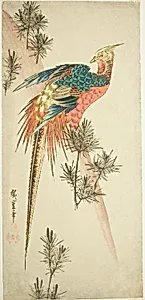
Golden pheasant and pine shoots in snow
c. 1833
Medium
Color woodblock print; otanzaku
Dimensions
38.3 × 18 cm (15 1/8 × 7 1/8 in.)
Classification
woodblock print
Department
Arts of Asia
Museum
Art Institute of Chicago
Accession Number
26196
Rights
Public Domain
Art Historical Context
In the crisp elegance of Utagawa Hiroshige *Golden Pheasant and Pine Shoots Snow* (c. 1833), visitors encounter a masterful example of ukiyo-e, the "pictures of the floating world" that captured Japan's Edo-period fascination with nature's fleeting beauty. Hiroshige, a leading figure in this woodblock print tradition alongside Hokusai, often turned his keen eye to birds, flowers, and landscapes, infusing them with poetic lyricism. This color woodblock print, in the tall otanzaku format (38.3 × 18 cm), evokes a wintry scene where a vibrant golden pheasant perches amid delicate pine shoots dusted with snow—a harmonious blend of vivid plumage against stark whites and greens. The otanzaku's narrow, vertical composition mimics hanging scrolls, ideal for intimate display in homes or as New Year's greetings (surimono). Hiroshige's technique shines through precise woodblock carving and layering of colors, achieved by multiple blocks inked in hues like Prussian blue and vermilion, creating subtle gradients and textures that mimic snow's softness and pine's resilience. Housed in the Art Institute of Chicago's Arts of Asia department, this print exemplifies ukiyo-e's technical innovation and cultural role in democratizing art for everyday viewers. Symbolically, the pheasant—associated with prosperity and the sun goddess Amaterasu—and enduring pine represent longevity and renewal, resonating in Japanese aesthetics. A gem of Hiroshige's nature series, it invites contemplation of winter's quiet splendor.
About the Artist
Utagawa Hiroshige · 1826–1869
Utagawa Hiroshige (1797–1858), born Andō Tokutarō, was the last great master of Japanese ukiyo-e woodblock printmaking and one of the most influential landscape artists in history. Born in Edo (modern Tokyo) into a low-ranking samurai family serving as fire wardens, Hiroshige transformed landscape printmaking into a poetic meditation on nature, weather, and everyday life. His revolutionary approac...