
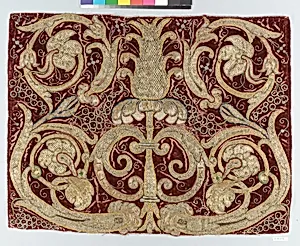
Golden tendrils against a red ground
Unknown Artist
16th century
Medium
Silk and metal-wrapped thread on velvet
Dimensions
Overall: 15 1/4 x 19 1/4 in. (38.7 x 48.9 cm)
Classification
Textiles-Embroidered
Culture
Italian or Spanish
Department
European Sculpture and Decorative Arts
Museum
Metropolitan Museum of Art, New York, NY
Credit
Gift of Kate Read Blacque, in memory of her husband, Valentine Alexander Blacque, 1933
Accession Number
33.95.63b
Rights
Public Domain
Tags
Art Historical Context
Behold the exquisite *Golden Tendrils against a Red Ground*, a 16th-century embroidered textile panel from the Metropolitan Museum of Art's European Sculpture and Decorative Arts collection. Crafted by an unknown Italian or Spanish artist, this small yet striking piece measures just 15¼ x 19¼ inches (38.7 x 48.9 cm). Delicate golden tendrils—likely floral vines—unfurl gracefully against a vibrant red velvet ground, worked in luxurious silk and metal-wrapped threads. These shimmering metallic accents catch the light, evoking the opulence of Renaissance-era craftsmanship. In the 16th century, such embroidered textiles were prized across Italy and Spain, often adorning ecclesiastical vestments, altar cloths, or elite furnishings. The use of velvet as a base provided a plush, regal texture, while the intricate couching and laid-work techniques for the metal threads ensured durability and brilliance—hallmarks of professional workshops. Floral motifs like these symbolized abundance and divine beauty, blending secular elegance with spiritual symbolism during the High Renaissance. Gifted to the Met in 1933 by Kate Read Blacque in memory of her husband, this rare survivor offers a window into the era's textile mastery. Visitors, imagine it draped in a noble chamber or sacred space, its golden glow as alive today as centuries ago.