
Gorget
Unknown Artist
ca. 1550
Medium
Steel, gold
Dimensions
Wt. 2 lb. 5 oz. (1049 g)
Classification
Armor Parts
Culture
German
Department
Arms and Armor
Museum
Metropolitan Museum of Art, New York, NY
Credit
Bashford Dean Memorial Collection, Bequest of Bashford Dean, 1928
Accession Number
29.150.1b
Rights
Public Domain
Art Historical Context
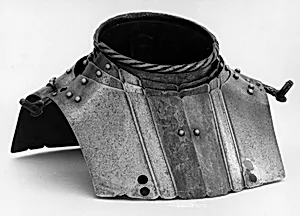
Step into the world of 16th-century German warfare with this exquisite gorget, a protective collar for the neck and throat crafted around 1550. Dating from the late Renaissance, when plate armor reached its peak of sophistication, this piece exemplifies the masterful blacksmithing of German armories, renowned for their precision and durability. Worn by knights or men-at-arms during battles like those of the Schmalkaldic War, it shielded one of the body's most vulnerable areas against slashes and thrusts, blending function with formidable presence on the battlefield. Forged from steel and adorned with gold—likely through gilding techniques that enhanced both beauty and corrosion resistance—this gorget weighs a substantial 2 pounds 5 ounces (1049 grams), underscoring the burden borne by soldiers. Its smooth, articulated form allowed for mobility while providing rigid defense, a testament to the era's innovative metallurgy. As part of the Arms and Armor department at The Metropolitan Museum of Art, gifted through the Bashford Dean Memorial Collection in 1928, it invites us to marvel at the anonymous artisan's skill, where every curve and seam reflects centuries of evolving combat needs. Though its maker remains unknown, this gorget captures the cultural prestige of German armor-making hubs, symbolizing the intersection of art, technology, and martial tradition in an age of religious strife and imperial ambition.