
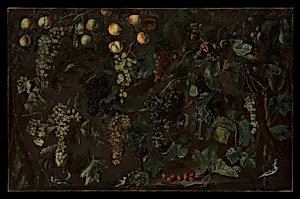
Grape Vines and Fruit, with Three Wagtails
ca. 1615–18
Medium
Oil on canvas
Dimensions
40 × 61 3/4 in. (101.6 × 156.8 cm)
Classification
Paintings
Department
European Paintings
Museum
Metropolitan Museum of Art, New York, NY
Credit
Gift of Claire and Giovanni Sarti, in honor of Keith Christiansen, 2016
Accession Number
2016.306
Rights
Public Domain
Tags
Art Historical Context
**Grape Vines and, with Three Wagt** by Bartolomeo Cavar (ca. 1615–18) is a captivating oil on canvas painting measuring an impressive 40 × 3/4 inches, now housed in the Metropolitan Museum of Art European Paintings department. This-scale work depicts lush grape vines heavy with ripe fruit, intertwined with three lively wagtails—small birds perched and in motion—creating a harmonious blend of still life and nature. Cavarozzi, a Roman artist influenced by Caravaggio's dramaticbrism, renders the scene with remarkable realism, capturing the textures of glistening grapes, twisting vines, and feathered details under soft, naturalistic light. Painted during the early Baroque era, this piece reflects the rising popularity of still life in Italy, a genre then dominated by Northern Europeans but eagerly adopted by artists like Cavarozzi. Its monumental size was unusual for still lifes, which were typically intimate tabletop scenes, suggesting it may have adorned a grand Roman palazzo. The inclusion of live birds adds a sense of vitality, bridging botanical abundance with fleeting wildlife, symbolizing nature's bounty and transience—a theme resonant in 17th-century Catholic Europe amid Counter-Reformation art. A generous gift to the Met in 2016, this painting showcases Cavarozzi's skill in hyper-realistic observation, inviting viewers to marvel at the interplay of abundance and ephemerality. Step closer to appreciate the juicy translucency of the grapes and the wagtails' delicate poise!