
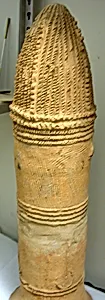
Grave Marker
Unknown Artist
3rd–11th century
Medium
Terracotta
Dimensions
Height 31-1/2 inches
Classification
Ceramics-Sculpture
Culture
Bura peoples
Department
Arts of Africa, Oceania, and the Americas
Museum
Metropolitan Museum of Art, New York, NY
Credit
Gift of Jerome Vogel, 1998
Accession Number
1998.478.2
Rights
Public Domain
Art Historical Context
This evocative terracotta grave marker, created by an unknown artist of the Bura peoples between the 3rd and 11th centuries, stands 31-1/2 inches tall and exemplifies ancient West African ceramic sculpture. Now in the Museum of Art's Department of Arts of Africa, Oceania, and the Americas—thanks to a 1998 gift from Jerome Vogel—it reflects the Bura's mastery of fired clay, a durable medium that allowed for monumental yet portable funerary art. For the Bura culture, flourishing in the Sahel region of West Africa, such markers held profound spiritual significance. Placed atop graves, they likely honored the deceased, invoked ancestral protection, and bridged the worlds of the living and the dead. The terracotta's earthy warmth and sculptural form highlight techniques like coiling and modeling, common in early African ceramics, which prioritized symbolic presence over naturalistic detail. Encountering this piece invites reflection on timeless human rituals around mortality, revealing the Bura's enduring artistic legacy in a pre-Islamic era of innovation and reverence.