
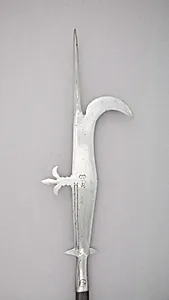
Guisarme
Unknown Artist
ca. 1480
Medium
Steel, wood
Dimensions
L. 79 1/4 in. (248.7 cm); L. of head 26 1/4 in. (66.6 cm); W. 6 in. (15.3 cm); Wt. 5 lb. 1 oz. (2296.3 g)
Classification
Shafted Weapons
Culture
Swiss
Department
Arms and Armor
Museum
Metropolitan Museum of Art, New York, NY
Credit
Gift of William H. Riggs, 1913
Accession Number
14.25.1
Rights
Public Domain
Art Historical Context
Step into the riveting world of late medieval warfare with this Swiss guisarme, a shafted weapon dating to around 1480. Crafted from steel and wood, it boasts an impressive overall length of 79¼ inches (248.7 cm), with a head measuring 26¼ inches (66.6 cm) long and 6 inches (.3 cm) wide, weighing in at a formidable 5 pounds 1 ounce (2296.3 g). Housed in the Metropolitan Museum of Art's Arms Armor Department, this piece was generously gifted by William H. Riggs in 1913. The guisarme exemplifies Swiss craftsmanship during a golden age of European arms production. Switzerland's reputation for elite infantry, particularly pikemen and halberdiers, made pole weapons like this essential for battles against mounted knights. Its long wooden shaft provided reach, while the steel head—likely forged with precision for thrusting, slashing, and hooking—balanced lethality with durability. Such weapons were not mere tools of war but feats of metallurgical artistry, reflecting the era's blend of function and form. This anonymous artifact invites us to ponder the human stories behind the steel: the skilled smiths who hammered it into shape and the soldiers who wielded it on misty Alpine fields. A testament to Swiss martial culture, it reminds visitors of how arms evolved from brutal necessity to objects of historical beauty.