
Gun Barrel
Unknown Artist
18th–19th century
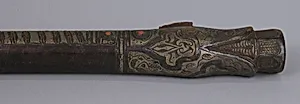
Medium
Steel, silver, copper, coral, turquoise
Dimensions
W. 35 5/8 in. (90.5 cm) Diam. 1 3/8 in. (3.5 cm)
Classification
Arms and Armor
Department
Islamic Art
Museum
Metropolitan Museum of Art, New York, NY
Credit
Edward C. Moore Collection, Bequest of Edward C. Moore, 1891
Accession Number
91.1.909
Rights
Public Domain
Tags
Art Historical Context
This exquisite gun barrel, dating to the 18th–19th century, exemplifies the masterful fusion of functionality and artistry in Islamic arms and armor. Crafted primarily from steel, it measures an impressive 35⅝ inches (90.5 cm) in width and 1⅜ inches (3.5 cm) in diameter, designed for a matchlock or flintlock firearm common in the Ottoman Empire or Persia during this era. The surface is richly adorned with silver, copper, coral, and turquoise inlays, showcasing intricate techniques like koftgari (gold or silver damascening) or gemstone embedding, which transformed weapons into status symbols for elite warriors and nobility. In the Islamic world, firearms emerged in the 16th century but reached peak decorative sophistication by the 18th century, reflecting cultural values of refinement amid warfare. These barrels were not mere tools of combat but objets d'art, often gifted to allies or displayed in armories to demonstrate wealth and craftsmanship. The use of vibrant materials like coral and turquoise evokes the opulence of courtly life, blending practical steel with jewelry-like embellishments. Part of the Edward C. Moore Collection at The Metropolitan Museum of Art (bequest of 1891), this piece invites visitors to ponder how beauty could grace even instruments of power, highlighting the enduring legacy of Islamic metalwork.