
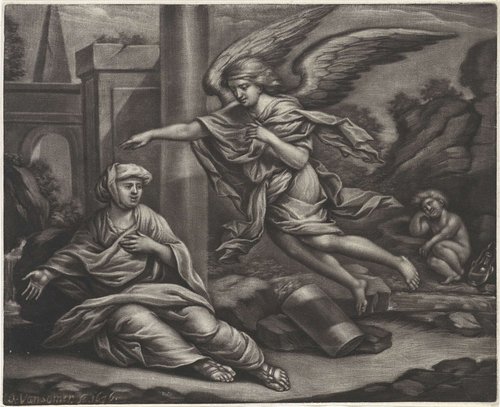
Hagar en Ismaël in de woestijn
1676
Medium
paper
Dimensions
218; 268
Rights
Public Domain
About this artwork
F.G. Waller Bequest, Amsterdam
Art Historical Context
Jan van Somer's *Hagar en Ismaël in de woestijn* (Hagar and Ish in the Desert), created in 1676, a poignant biblical moment from the Book of Genesis. The scene depicts the Egyptian servant Hagar and her son Ishmael, exiled the barren wilderness by Abraham at Sarah's urging, facing thirst and despair until divine intervention provides a well of water. This intimate drawing on paper, measuring just 218 × 268 mm, invites viewers to contemplate themes of faith, survival, and providence that resonated deeply in 17th-century Dutch culture. As a product of the Dutch Golden Age, van Somer's work reflects the era's fascination with religious narratives, often rendered with meticulous detail in drawings that served as studies, collector's items, or print sources. Working primarily in paper media, van Somer employed techniques like ink washes or chalk to evoke texture and emotion on a modest scale, making such pieces accessible yet profound for private contemplation. The artwork's provenance from the F.G. Waller Bequest in Amsterdam underscores its place in esteemed collections, preserving a slice of Holland's artistic heritage. This delicate piece reminds us how small-scale works could convey universal stories, bridging art and spirituality for generations of museum-goers.