
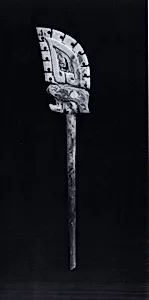
商 骨簪|Hairpin
Unknown Artist
13th–11th century BCE
Medium
Bone
Dimensions
L. 6 5/16 in. (16 cm); W. 1 3/8 in. (3 cm)
Classification
Bone
Culture & Period
China · Shang dynasty (ca. 1600–1046 B.C.)
Department
Asian Art
Museum
Metropolitan Museum of Art, New York, NY
Credit
Gift of Ernest Erickson Foundation, 1985
Accession Number
1985.214.116
Rights
Public Domain
Art Historical Context
This elegant bone hairpin, crafted during China's Shang dynasty (ca. 1600–1046 B.C.), hails from the 13th–11th BCE—a golden age of early Bronze Age innovation. Measuring 6 5/16 long and 1 3/8 inches wide, slender form suggests it was designed to secure elaborate hairstyles, a mark of status among the elite. Now housed in the Metropolitan Museum of Art's Art Department as a gift from the Ernest Foundation in 1985, it offers a glimpse into the refined daily life of ancient Chinese aristocracy. Bone, a readily available yet challenging medium, was skillfully carved in the Shang period, showcasing the era's advanced craftsmanship. Shang artisans, famed for bronze ritual vessels and oracle bones inscribed with the earliest forms of Chinese writing, applied similar precision to personal ornaments like this hairpin. Such items were not mere accessories but symbols of social hierarchy, often worn by women or high-ranking individuals during rituals or courtly functions. Though the artist remains unknown, this artifact underscores the Shang's mastery of organic materials, bridging utilitarian function with aesthetic grace. Visitors, imagine pinning back your hair with a piece of history—timeless elegance from over 3,000 years ago!