
Halberd
Unknown Artist
ca. 1590
Medium
Steel, wood
Dimensions
L. 99 7/8 in. (253.5 cm); L. of head 20 9/16 in. (52.2 cm); W. 9 5/16 in. (23.7 cm); Wt. 5 lbs. 6 oz. (2440 g)
Classification
Shafted Weapons
Culture
French
Department
Arms and Armor
Museum
Metropolitan Museum of Art, New York, NY
Credit
Rogers Fund, 1904
Accession Number
04.3.73
Rights
Public Domain
Art Historical Context
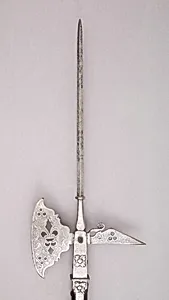
Step into the riveting world of 16th-century warfare with this imposing French halberd, around 1590. Measuring nearly 100 inches in length, with a substantial steel head spanning over 20 inches and weighing a hefty 5 pounds 6 ounces, this shafted weapon exemplifies the fusion of lethal functionality and masterful metallurgy. Its wooden shaft provided balance and reach, while the steel axe blade, spike, and hook allowed for slashing, thrusting, and grappling—versatile tools for the battlefield or ceremonial guard duty. Dating to the late Renaissance amid France's turbulent Wars of Religion, halberds like this one armed pikemen and halberdiers in elite infantry units, symbolizing both military might and social order. Produced by an unknown artisan, it reflects the pinnacle of French arms-making, where blacksmiths tempered steel for durability and sharpness, often in bustling workshops of Paris or Lyon. The intricate balance of form and ferocity highlights how weapons were not mere tools but expressions of cultural prowess. Today, acquired through the Rogers Fund in 1904, this halberd graces the Metropolitan Museum of Art's Arms and Armor Department, inviting us to ponder the artistry behind history's deadliest designs. A testament to human ingenuity, it bridges the gap between craft and combat.