
Halberd
Unknown Artist
17th century
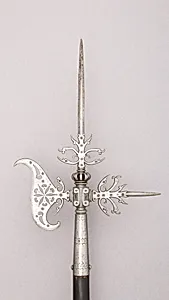
Medium
Steel, wood
Dimensions
L. 84 in. (213.3 cm); L. of head 13 1/2 in. (34.4 cm); W. 8 5/8 in. (21.9 cm); Wt. 2 lbs. 7 oz. (1110 g)
Classification
Shafted Weapons
Culture
Flemish
Department
Arms and Armor
Museum
Metropolitan Museum of Art, New York, NY
Credit
Gift of William H. Riggs, 1913
Accession Number
14.25.225
Rights
Public Domain
Art Historical Context
Step into the Arms and Armor gallery at the Metropolitan Museum of Art, where this imposing 17th-century Flemish halberd stands as a testament to the era's martial ingenuity. Crafted from steel and wood, the weapon measures an impressive 84 inches (213.3 cm) in length, with a hefty head spanning 13½ inches (34.4 cm) long and 8⅝ inches (21.9 cm) wide, weighing just over 2 pounds (1110 g). Its design—a versatile shafted weapon combining axe blade, spear point, and thrusting hook—made it ideal for infantry combat, allowing soldiers to chop, stab, or pull mounted foes from horseback. Produced in Flanders, a hub of renowned metalworking during the Spanish Netherlands period, this halberd reflects the region's expertise in forging durable, balanced arms. By the 17th century, as firearms gained prominence, such pole weapons often served ceremonial roles for guards or pikemen, blending lethal function with ornate craftsmanship. Though the artist remains unknown, the steel's precision forging highlights Flemish technical prowess. A generous gift from William H. Riggs in 1913, this halberd invites visitors to ponder the brutal elegance of early modern warfare and the cultural prestige of Flemish armsmiths.