
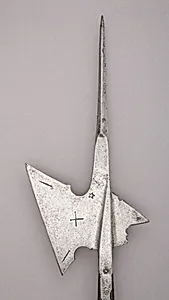
Halberd
Unknown Artist
early 16th century
Medium
Steel, wood (oak)
Dimensions
L. 89 1/4 in. (226.6 cm); L. of head 18 3/8 in. (46.6 cm); W. 9 1/2 in. (24.1 cm); Wt. 4 lbs. 13 oz. (2180 g)
Classification
Shafted Weapons
Culture
German
Department
Arms and Armor
Museum
Metropolitan Museum of Art, New York, NY
Credit
Bequest of Alan Rutherfurd Stuyvesant, 1954
Accession Number
54.46.17
Rights
Public Domain
Art Historical Context
This imposing German halberd from the early 16th century exemplifies the pinnacle of Renaissance weaponry craftsmanship. Crafted from a sturdy oak shaft measuring nearly 7.5 feet long and a forged steel head combining an axe blade, spear point, and rear hook, it weighs just over 4 pounds—balanced for both thrusting power and agile swings. The head alone spans 18 inches wide, designed for versatility on the battlefield. Halberds like this were iconic among German Landsknecht mercenaries and Swiss pikemen, who revolutionized infantry tactics during the Italian Wars (1494–1559). The weapon's multi-pronged design allowed soldiers to chop through armor, impale foes, or unhorse cavalry, making it a symbol of the era's shift from feudal knights to professional foot soldiers. Its German origins reflect the region's renowned metalworking guilds, where smiths tempered steel for durability amid the religious and political upheavals of the Reformation. Now in the Metropolitan Museum of Art's Arms and Armor Department, thanks to the 1954 bequest of Alan Rutherfurd Stuyvesant, this halberd invites us to ponder the artistry in tools of war—where form met lethal function in an age of innovation and conflict.