
Hammered Copper Tweezers
Unknown Artist
8th–mid-16th century
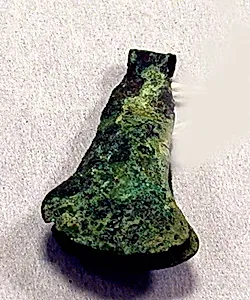
Medium
Copper
Dimensions
H x W: 1 3/8 x 13/16 in. (3.5 x 2 cm)
Classification
Metal-Ornaments
Culture
Peru; north coast (?)
Department
Arts of Africa, Oceania, and the Americas
Museum
Metropolitan Museum of Art, New York, NY
Credit
Gift of Mr. and Mrs. Nathan Cummings, 1964
Accession Number
64.228.498
Rights
Public Domain
Art Historical Context
This delicate pair of hammered copper tweezersails from Peru's north coast, likely crafted between the 8th and mid-16th centuries—a span encompassing vibrant pre-Columbian cultures such as the Chimú andán, before Spanish arrival. Measuring just 1⅜ x 13/16 inches (3.5 x 2 cm), this tiny metal ornament blends everyday utility with artistic finesse. In ancient Andean societies, such tools were essential for personal grooming, removing facial hair, or even preparing for rituals, reflecting a culture that prized meticulous self-presentation. The object's creation showcases sophisticated metalworking techniques: thin copper sheets were meticulously hammered into shape, demonstrating mastery of cold-working without modern tools. Copper, abundant in the Andes, held symbolic value tied to prestige and craftsmanship, often adorning elites. As a "Metal-Ornament," it highlights Peru's north coast tradition of innovative metallurgy, where functionality met aesthetic elegance in everyday items. Today, this gift to the Metropolitan Museum of Art from Mr. and Mrs. Nathan Cummings in 1964 offers a window into the ingenuity of Peru's ancient artisans. Though small, it whispers tales of a thriving coastal world where beauty emerged from humble materials.