
Hammered Silver Cone Ornament
Unknown Artist
8th–mid-16th century
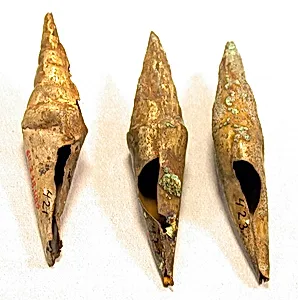
Medium
Silver (hammered), gilt
Dimensions
H x W: 2 15/16 x 9/16 in. (7.5 x 1.5 cm)
Classification
Metal-Ornaments
Culture
Peru; north coast (?)
Department
Arts of Africa, Oceania, and the Americas
Museum
Metropolitan Museum of Art, New York, NY
Credit
Gift of Mr. and Mrs. Nathan Cummings, 1964
Accession Number
64.228.488
Rights
Public Domain
Art Historical Context
This delicate *Hammered Silver Cone Or* hails from Peru's north coast, dating to a remarkable span from the 8th to mid-16th century.ed by an unknown artist, its petite form—standing just under 3 inches tall and a half-inch wide—suggests it served as a personal adornment perhaps for hair, ears, or clothing in pre-Columbian Andean societies. Now housed in the Metropolitan Museum Art's Department of Arts of Africa,, and the Americas, entered the collection as a generous gift from Mr. and Mrs. Nathan Cummings in 1964. The ornament showcases sophisticated metalworking techniques of ancient Peru. Hammered from silver sheet and enhanced with gilding—a process of applying a thin gold layer for luster—this piece highlights the skill of north coast artisans. Silver, sourced from Andean mines, was prized for its shine and malleability, while gilding elevated its status, likely marking the wearer as elite. Such cone-shaped ornaments were common in Chimú and Inca-influenced cultures, symbolizing prestige amid a vibrant tradition of personal decoration. Though its exact use remains a tantalizing mystery, this artifact offers a window into the ingenuity of pre-Columbian Peruvians, blending functionality with artistry in everyday finery. Visitors, imagine pinning it to a tunic during a coastal festival— a shimmering testament to enduring craftsmanship.