
Hanagasaren shichifukujin
Katsukawa Shuntei, c. 1820
About this artwork
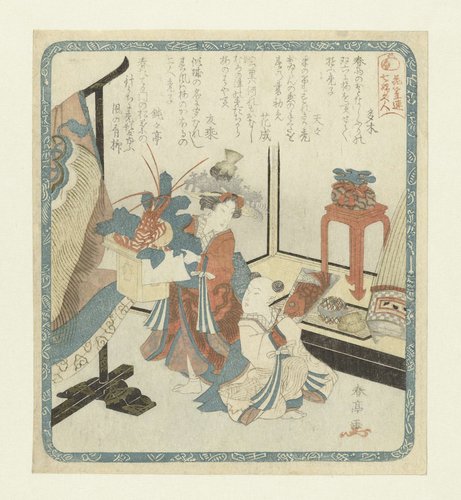
**Hanagasaren Shichukujin** is a delicate woodblock print by Katsukawa Shuntei, a prominent ukiyo-e artist of Japan's late Edo period (c. 1820). Shuntei, from the esteemed Katsukawa school known for vivid actor portraits and genre scenes, captures the Seven Lucky Gods (*shichifukujin*)—benevolent deities like Ebisu, Daikokuten, and Benzaiten—in a playful, floral motif suggested by the title, evoking scattered blossoms (*hana gasaren*). These figures, symbols of fortune and prosperity, were beloved in popular culture, often featured in New Year's greetings or surimono prints commissioned for elite patrons. Crafted as a *nishikie* (brocade picture), this small-format work (199 × 176 mm) showcases the pinnacle of ukiyo-e technique: intricate woodblock carving layered with vibrant pigments and metallic accents like gold or silver mica. These luxurious touches added a shimmering, jewel-like quality, elevating affordable prints to art treasures. The print's compact size hints at personal or gift use, reflecting the democratizing spirit of ukiyo-e amid Japan's urban flourishing. Bearing a collector's mark "JABdH" with a rooster (bottom left, under passe-partout), it nods to European fascination with Japanese prints during the 19th century. This piece exemplifies how ukiyo-e bridged Eastern folklore and global art influence, delighting viewers with its whimsical charm and technical brilliance.