
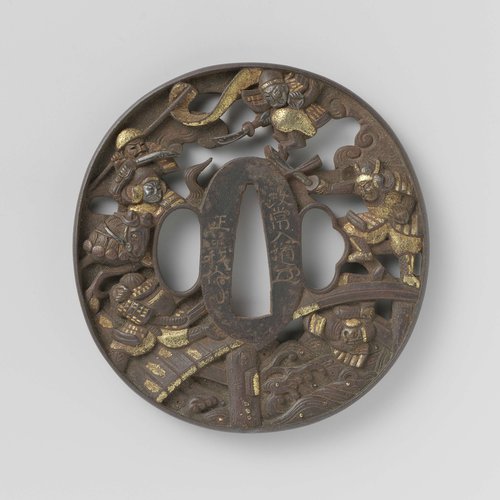
Hand guard
1750 - 1800
Medium
iron (metal)
Dimensions
7.8; 7.5
Rights
Public Domain
About this artwork
Bruikleen van de Koninklijke Vereniging van Vrienden der Aziatische Kunst (legaat Westendorp-Osieck, 1968)
Art Historical Context
This exquisite *Hand guard* (tsuba), crafted by the skilled Japanese artisan Sadashichi Masay between 1750 and 1800, exemplifies the refined metalwork of Japan's Edo period (16031868). Measuring just 7.8 cm high by 7.5 cm wide, this iron piece served as a protective guard on a samurai sword hilt, blending functionality with artistry. Tsuba like this were essential components of the katana, preventing an opponent's blade from sliding onto the wielder's hand while showcasing the owner's status and taste. Forged from iron—a durable medium prized for its workability—Sadashichi Masayoshi's design reflects the era's mastery of *sukashi* (openwork) piercing and subtle surface patination techniques. These methods allowed light to play through intricate perforations, often depicting nature motifs or symbolic scenes, turning a utilitarian object into a wearable sculpture. During the peaceful Edo period, tsuba evolved from battlefield necessities into collector's items, patronized by samurai and merchants alike. Today, this hand guard is on loan to the museum from the Koninklijke Vereniging van Vrienden der Aziatische Kunst, via the 1968 bequest of Westendorp-Osieck, highlighting Europe's enduring fascination with Japanese craftsmanship. It invites us to appreciate the quiet elegance of samurai culture, where beauty fortified the blade.