
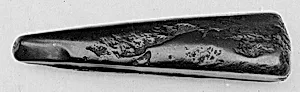
Hand-pestle
Unknown Artist
Medium
Nephrite
Dimensions
H. 4 13/16 in. (12.2 cm); W. 1 7/16 in. (3.7 cm); D. 7/8 in. (2.3 cm)
Classification
Jade
Culture & Period
North America (Alaska) · Prehistoric
Department
Asian Art
Museum
Metropolitan Museum of Art, New York, NY
Credit
Gift of Heber R. Bishop, 1902
Accession Number
02.18.278
Rights
Public Domain
Art Historical Context
This exquisite hand-pest, carved from nephrite tough, resilient form of jade—offers a glimpse into prehistoric life in Alaska. Measuring just 4 13/ inches tall, its compact, ergonomic shape (1 7/16 inches wide 7/8 inch deep) suggests it was for handheld use, likely for grinding pigments, foodstuffs, or medicines in a mortar. Nephrite's durability made it ideal for such tools, prized by ancient cultures for both utility and its lustrous green hue. Hailing from North America's Alaskan region during prehistoric times, this artifact reflects the sophisticated stone-working techniques of indigenous peoples. Carving nephrite required immense skill, as the material ranks high on the hardness scale, demanding precise abrasion and polishing methods passed down through generations. Such implements were essential to daily survival, underscoring the ingenuity of early Alaskans in harnessing local resources. Now housed in the Metropolitan Museum of Art's Asian Art Department (thanks to a 1902 gift from Heber R. Bishop), this anonymous masterpiece bridges function and artistry. It invites us to ponder the hands that shaped it millennia ago, connecting modern visitors to a vibrant prehistoric world.