
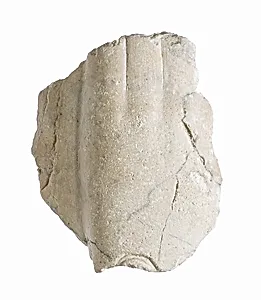
Hand raised to support an element
Unknown Artist
ca. 1353–1336 B.C.
Medium
Indurated limestone
Dimensions
H. 8.5 × W. 6 × D. 4.2 cm (3 3/8 × 2 3/8 × 1 5/8 in.); Estimated Cartouche: W. 1.7 cm (11/16 in.)
Classification
Hand, tablet or stela
Period
New Kingdom, Amarna Period
Department
Egyptian Art
Museum
Metropolitan Museum of Art, New York, NY
Credit
Gift of Edward S. Harkness, 1921
Accession Number
21.9.456
Rights
Public Domain
Art Historical Context
This petite fragment, titled *Hand Raised to Support an Element*, hails from ancient Egypt's Amarna Periodca. 1353–1336 B.C.), a transformative era in Dynasty 18 of the New Kingdom. Carved from indurated limestone—a durable, hardened stone prized for its fine grain and resistance to weathering—the sculpture measures just 8.5 cm high. It depicts a finely detailed hand raised in a gesture of support, likely part of a larger or architectural element, with space for an estimated cartouchea royal name oval) measuring 1.7 cm wide. Such fragments were common in elite tombs or temples, symbolizing eternal service or protection. The Amarna Period, under Pharaoh Akhenaten, revolutionized Egyptian art with a shift toward naturalism and elongated proportions, breaking from rigid conventions. This piece exemplifies the period's masterful low-relief carving techniques, where artisans achieved lifelike anatomy and subtle muscle tension on a small scale. Donated to the Metropolitan Museum of Art in 1921 by Edward S. Harkness, it offers a glimpse into the innovative spirit of Akhenaten's court, centered in the short-lived capital of Amarna, where art celebrated the sun god Aten and humanized royal figures. Though the artist remains unknown, the fragment's precision highlights the era's skilled workshops, blending functionality with profound cultural symbolism—hands often evoked divine support in afterlife beliefs. A tiny testament to ancient ingenuity!