
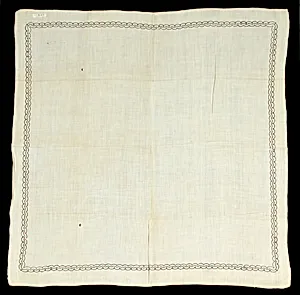
Handkerchief
Unknown Artist
1860–70
Medium
Linen
Classification
Handkerchief
Culture
American
Department
Costume Institute
Museum
Metropolitan Museum of Art, New York, NY
Credit
Brooklyn Museum Costume Collection at The Metropolitan Museum of Art, Gift of the Brooklyn Museum, 2009; Gift of Sarah F. Milligan and Kate Milligan Brill, 1940
Accession Number
2009.300.4285
Rights
Public Domain
Art Historical Context
This delicate linen handkerchief, crafted by an unknown American artist between 1860 1870, offers a glimpse into the everyday elegance of mid-19th-century life. Linen, prized for its breathability, durability, and subtle sheen, was a staple fabric in American households during this era. Derived from flax plants, it required skilled weaving and was often imported or produced domestically, reflecting the growing textile industry in the post-Civil War North. Handkerchiefs like this one served practical purposes—wiping hands, noses, or brows—while doubling as fashion accessories. Women carried them tucked into sleeves or pockets, sometimes monogrammed or edged with lace, signaling refinement amid the era's social upheavals, including the Civil War (1861–65) and Reconstruction. As a Costume Institute treasure at The Metropolitan Museum of Art, gifted from the Brooklyn Museum's collection, it highlights the intimate role of textiles in American culture, preserving the tactile stories of ordinary people. Though simple, this artifact underscores linen's cultural prestige, bridging utility and understated artistry in a time of rapid industrialization. Visitors, imagine unfolding it in a bustling 1860s parlor— a quiet testament to quiet craftsmanship.