
Handkerchief
Unknown Artist
late 18th century
Medium
Cotton
Dimensions
L. 14 1/4 x W. 15 5/8 inches (36.2 x 39.7 cm)
Classification
Textiles-Printed
Culture
British
Department
European Sculpture and Decorative Arts
Museum
Metropolitan Museum of Art, New York, NY
Credit
Rogers Fund, 1913
Accession Number
13.69.42
Rights
Public Domain
Tags
Art Historical Context
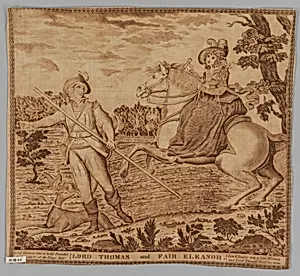
Step into the world of 18th-century British fashion with this charming printed cotton handkerchief, a modest yet delightful artifact from the late 1700s. Measuring about 14 by 15 inches, this square textile captures everyday life through lively motifs of men, women, dogs and horses—likely evoking scenes of leisure, hunting, or rural pursuits so beloved in Georgian England. Produced by an unknown artist, it exemplifies the's booming textile trade, where handkerchiefs served as fashionable accessories for both men and women, tucked into pockets or worn as neckerchiefs. Crafted from cotton, a fabric revolutionized by British industrialization and imports from India and the Americas, this piece highlights innovative printing techniques like block-printing or copperplate methods. These allowed for vibrant, multi-color designs on fine cotton, making luxury patterns accessible beyond the elite. By the late 18th century, such printed textiles were a hallmark of British decorative arts, reflecting cultural obsessions with equestrian sports and companion animals amid the Agricultural and early Industrial Revolutions. Today, housed in the Metropolitan Museum of Art's European Sculpture and Decorative Arts department (acquired via the Rogers Fund in 1913), this handkerchief offers a tactile glimpse into social history. It reminds us how ordinary objects wove together artistry, commerce, and daily joy in Britain's vibrant past.