
Hanging
Unknown Artist
19th century
Medium
Silk / Compound weave: satin ground
Dimensions
76 x 21 1/4 in. (193.04 x 53.98 cm)
Classification
Textiles-Woven
Culture & Period
China · Qing dynasty (1644–1911)
Department
Asian Art
Museum
Metropolitan Museum of Art, New York, NY
Credit
Rogers Fund, 1908
Accession Number
08.44.9
Rights
Public Domain
Tags
Art Historical Context
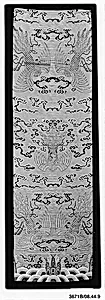
This exquisite silk hanging from China's Qing dynasty (16441911), created by an unknown artist in the19th century, exemplifies era's masterful textile artistry. Measuring 76 x 21¼ inches, it was woven using a compound weave on a satin ground—a sophisticated technique that creates a lustrous, reflective surface by floating silk threads over multiple warps. Acquired through the Rogers Fund in 190 and now in the Metropolitan Museum of Art's Asian Art collection, this textile served as a luxurious wall hanging, likely adorning elite homes or imperial spaces. The phoenix motif, a recurring tag for this piece, holds profound cultural symbolism in Chinese tradition. Known as the fenghuang, it represents virtue, grace, prosperity, and the empress, often paired with dragons in imperial iconography. During the Qing period, silk production reached new heights under Manchu rule, with weaves like this showcasing technical innovation and opulent materials reserved for the upper class. Qing textiles like this hanging highlight China's enduring legacy in silk weaving, a craft refined over millennia along the Silk Road. Its satin sheen not only enhances visual appeal but also demonstrates the weaver's skill in balancing durability with elegance, inviting visitors to appreciate the tactile splendor of imperial-era design.