
Hanging (Palempore)
Unknown Artist
early 18th century
Medium
Cotton; painted
Dimensions
L. 86 1/2 in. (219.7 cm) W. 49 1/2 in. (25.7 cm)
Classification
Textiles-Painted and/or Printed
Department
Islamic Art
Museum
Metropolitan Museum of Art, New York, NY
Credit
Rogers Fund, 1926
Accession Number
26.28.2
Rights
Public Domain
Tags
Art Historical Context
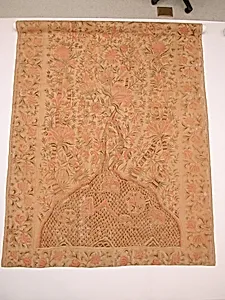
This vibrant *Hanging (Palempore)*, created by an unknown artist in the 18th century, a stunning example of painted cotton textile from the Islamic Art tradition. Measuring an impressive 86½ inches long by 49½ inches wide, it was likely used as a luxurious bed hanging or wall covering. The medium—cotton meticulously painted with natural dyes—showcases the intricate hand-painted techniques popular in South Asian workshops, where mordants (chemical fixatives) were applied to create bold, colorfast motifs that resisted fading. Palempores like this one were prized exports from India, particularly the Coromandel Coast, during the height of European trade with the East. Adorned with lively depictions of animals and flowers (as evident from its tags), it reflects the exuberant "tree-of-life" style blending floral abundance and fauna, symbolizing fertility and prosperity in Mughal-influenced designs. These textiles captivated European elites, influencing fashion and interiors amid the craze for chintz. Acquired through the Rogers Fund in 1926, this piece at the Metropolitan Museum of Art highlights the cultural exchange between Asia and the West. Its enduring colors and dynamic patterns invite visitors to imagine opulent 18th-century chambers alive with exotic splendor. (198 words)