
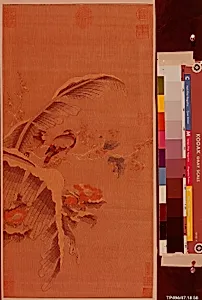
清 佚名 歲寒雙禽圖 軸 緙絲|Hanging scroll
Unknown Artist
18th century
Medium
Hanging scroll; silk tapestry (kesi)
Dimensions
H. 6 in. (15.2 cm); Diam. 6 1/4 in. (15.9 cm)
Classification
Textiles-Tapestries
Culture
China
Department
Asian Art
Museum
Metropolitan Museum of Art, New York, NY
Credit
From the Collection of A. W. Bahr, Purchase, Fletcher Fund, 1947
Accession Number
47.18.58
Rights
Public Domain
Tags
Art Historical Context
This exquisite hanging scroll from 18th-century China showcases the refined art of kesi, or silk tapestry weaving. Created by an anonymous artist during the Qing dynasty, the work depicts two birds amid a wintry landscape, rendered in delicate threads that mimic the precision of brush painting. The kesi technique, known as “cut silk,” allows weavers to produce intricate details and subtle color gradations by interlocking colored wefts, resulting in a textile that closely resembles a painted scroll while possessing remarkable durability and luminosity. In Chinese culture, images of birds enduring the cold season often symbolize resilience, companionship, and harmony with nature. Such motifs were popular in both court and scholarly circles, reflecting Confucian ideals of steadfast virtue. Though small in scale, this tapestry would have been treasured as a refined decorative piece, possibly displayed during winter months to evoke quiet contemplation. Acquired by the Metropolitan Museum from the collection of A.W. Bahr, the scroll exemplifies the museum’s holdings of Chinese textiles that highlight the seamless blend of craftsmanship and poetic imagery in Qing dynasty art.