
Happy Ending
c. 1715
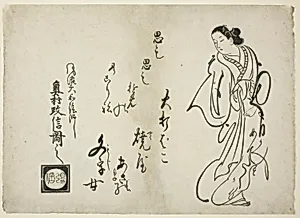
Medium
Woodblock print; oban yoko-e, sumizuri-e
Dimensions
27.2 × 37.8 cm (14 13/16 × 10 5/8 in.)
Classification
woodblock print
Department
Arts of Asia
Museum
Art Institute of Chicago
Accession Number
44110
Rights
Public Domain
Art Historical Context
**Happy Ending** by Okumura Masobu, created around 1715, is a woodblock print from Japan's Edo period, embodying the vibrant ukiyo-e tradition—"pictures of the floating world that celebrated everyday pleasures like theater, beauty, and romance. Masanobu, a pioneeringmaker active in Edo (modern Tokyo), helped popularize affordable art for urban audiences through innovative techniques. This *oban yoko-e* (large horizontal format, measuring 27.2 × 37.8 cm) likely depicts a theatrical or narrative scene suggesting resolution and joy, inviting viewers into the lively culture of 18th-century Japan. Printed as a *sumizuri-e*—a monochrome technique using black ink (*sumi*) on paper—this work showcases early ukiyo-e's technical ingenuity. Woodblocks allowed mass production, making sophisticated imagery accessible beyond elites. Masanobu's mastery of line work and shading created depth and drama without color, sometimes enhanced with mica for subtle shimmer, reflecting the era's blend of craftsmanship and commercial savvy. Housed in the Art Institute of Chicago's Arts of Asia department, *Happy Ending* highlights ukiyo-e's cultural role in democratizing art and storytelling. It offers a window into Edo's bustling entertainment world, where prints like this fueled kabuki fandom and urban fantasy, influencing global art for centuries.
About the Artist
Okumura Masanobu · 1686–1764
Japanese, 1686–1764