
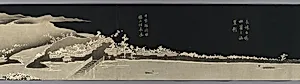
伊藤若冲画 「乗興舟」|Happy Improvisations on a Riverboat Journey
ca. 1767
Medium
Handscroll; woodblock print; ink on paper
Dimensions
11 3/16 x 39 ft. 7/16 in. (28.4 x 1189.9 cm)
Classification
Prints
Culture & Period
Japan · Edo period (1615–1868)
Department
Asian Art
Museum
Metropolitan Museum of Art, New York, NY
Credit
The Harry G. C. Packard Collection of Asian Art, Gift of Harry G. C. Packard, and Purchase, Fletcher, Rogers, Harris Brisbane Dick, and Louis V. Bell Funds, Joseph Pulitzer Bequest, and The Annenberg Fund Inc. Gift, 1975
Accession Number
1975.268.70
Rights
Public Domain
Tags
Art Historical Context
Behold *Happy Improvisations on aboat Journey* (*乗興舟*), a captivating handscroll by the visionary Japanese artist Itō Jakuchū, created around 1767 during the Edo period (1615–1868). Jakuchū, a Kyoto-based painter renowned for his bold, imaginative style blending meticulous realism with whimsical flair, often drew from nature and everyday life. This monumental work, stretching nearly 40 feet, evokes the serene joy of a riverside excursion, capturing the Edo era's fascination with travel, leisure, and fleeting pleasures amid Japan's peaceful prosperity. Printed as a woodblock print in ink on paper—a rare format for such an expansive handscroll—this piece showcases the precision of Edo-period printing techniques, where intricate carvings transferred Jakuchū's dynamic lines onto vast sheets joined seamlessly. Its panoramic landscape format immerses viewers in winding rivers and lush scenery, reflecting ukiyo-e influences while highlighting Jakuchū's unique ability to infuse motion and vitality into static scenes. As a print, it democratized high art, allowing broader access beyond elite patrons. Housed in the Metropolitan Museum of Art's Asian Art Department from The Harry G. C. Packard Collection, this treasure celebrates Japan's cultural reverence for nature's rhythms and human delight in spontaneous adventure. A perfect invitation to unroll and drift along the river yourself! (198 words)
About the Artist
Itō Jakuchū · 1716–1800
Painter and printmaker of the Middle Edo period. He studied the methods of the Kanō School, but soon became dissatisfied and began to turn to the works of the Chinese masters of the Song and Yuan periods for inspiration. He believed the true art of painting lay in the faithful representation of nature, excelling in depictions of plants and animals. His work is distinguished by bright colors, decor...