
Harpsichord
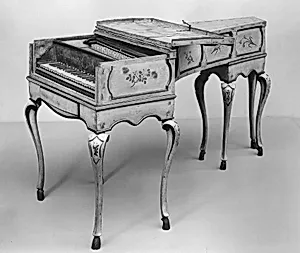
Medium
Wood, various materials
Dimensions
Inner instrument: L. 151.9 cm W. 71.2 cm D. 16.7 cm
Classification
Chordophone-Zither-plucked-harpsichord
Culture
Italian
Department
Musical Instruments
Museum
Metropolitan Museum of Art, New York, NY
Credit
The Crosby Brown Collection of Musical Instruments, 1889
Accession Number
89.4.1226a–c
Rights
Public Domain
Art Historical Context
Step into the enchanting world of 18th-century Italian music with this exquisite harpsichord crafted Giovanni Paolo Leoni in1773. Housed in the Metropolitan Museum of Art's Department of Musical Instruments as part of the renowned Crosby Brown Collection (acquired in 1889), this chordophone—classified as a zither-plucked harpsord—exemplifies the pinnacle of Renaissance instrument-making traditions refined over centuries. Measuring 151.9 cm long, 71.2 cm wide, and 16.7 cm deep for its inner mechanism, it was designed for intimate chamber performances, its wooden case and various materials showcasing the meticulous joinery and acoustic precision typical of Italian craftsmanship. By the late 1770s, harpsichords like Leoni's bridged the Baroque era's ornate polyphony—think Vivaldi and Bach—with the emerging Classical clarity of Mozart's time. Yet, as the fortepiano gained favor for its dynamic range, instruments like this one represented a fading golden age, prized for their bright, plucked-string timbre that pierced through ensembles without amplification. Italian makers, often from workshops in Bologna or Florence, emphasized elegant proportions and resonant woods, making each harpsichord not just a tool, but a work of functional art. Today, this survivor invites us to ponder music's evolution, evoking the salons where aristocrats and virtuosos once gathered. Gently plucking its strings would yield a cascade of crystalline notes, a timeless echo of Italy's cultural splendor.