
Hatchet
Unknown Artist
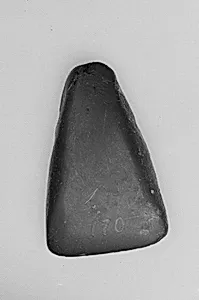
Medium
Chloromelanite
Dimensions
H. 1 7/8 in. (4.8 cm); W. 1 1/4 in. (3.1 cm); D. 7/16 in. (1.1 cm)
Classification
Jade
Culture
Switzerland
Department
Asian Art
Museum
Metropolitan Museum of Art, New York, NY
Credit
Gift of Heber R. Bishop, 1902
Accession Number
02.18.170
Rights
Public Domain
Art Historical Context
Nestled in the Metropolitan Museum of Art's Art department, this petite *Hatchet* exemplifies the allure of ancient craftsmanship in chloromelanite, a, dark green-to-black variety of jadeite Carved by an unknown artist at an undetermined date, the object measures just 1 7/8 inches high, 1 1/4 inches wide, and 7/16 inches deep—small enough to fit in the palm of your hand. Its hatchet form, with a slender blade and sturdy haft, suggests it may have served ceremonial or symbolic purposes rather than practical use, evoking the prestige of jade in prehistoric societies. Linked to Swiss culture, this jade piece highlights Europe's own rich tradition of working hardstone materials, particularly from Alpine sources where chloromelanite was quarried during the Neolithic period. Jade's exceptional toughness made it ideal for carving durable forms, and its lustrous polish speaks to skilled lapidary techniques that prized translucency and color. Though displayed among Asian jades, its Swiss origins offer a fascinating cross-cultural comparison, underscoring jade's global appeal as a "stone of heaven." A generous gift from Heber R. Bishop in 1902, this hatchet invites us to ponder the shared human fascination with jade across continents—timeless symbols of power, ritual, and artistry.