
Hatchet
Unknown Artist
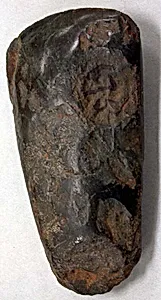
Medium
Nephrite
Dimensions
L. 4 1/8 in. (10.5 cm); W. 2 1/4 in. (5.7 cm); D. 1 in. (2.5 cm)
Classification
Jade
Culture
Papua New Guinea (Huon Gulf)
Department
Asian Art
Museum
Metropolitan Museum of Art, New York, NY
Credit
Gift of Heber R. Bishop, 1902
Accession Number
02.18.291
Rights
Public Domain
Art Historical Context
This finely crafted nephrite hatchet from the Huon Gulf region Papua New Guinea exemplifies the stoneworking traditions of Oceanic cultures. Carved from nephrite—a tough, resilient form of jade prized for its durability and lustrous green hue—the tool measures a compact 4⅛ inches long, making it ideal for precise woodworking or ceremonial use. Its smooth, polished surfaces and ergonomic shape highlight the skill of an unknown artisan, who transformed raw stone into a functional yet aesthetically striking object. In Huon Gulf societies, such jade hatchets (often called adzes) held deep cultural significance beyond their practical role in crafting canoes, houses, and tools. Nephrite, sourced from distant riverbeds and traded across vast networks, symbolized wealth, status, and spiritual power. These implements were not just everyday items but heirlooms passed down generations, embodying ancestral connections and communal prestige. Acquired as part of Heber R. Bishop's renowned jade collection and gifted to The Metropolitan Museum of Art in 1902, this hatchet offers a window into pre-colonial Papua New Guinean ingenuity. Though its exact date remains unknown, it reflects enduring artistic traditions that continue to inspire admiration for their blend of utility and beauty.