
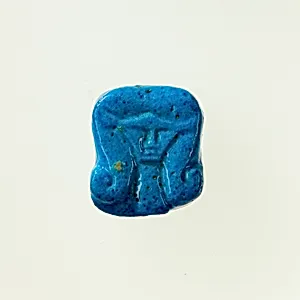
Hathor head amulet
Unknown Artist
ca. 1550–525 B.C.
Medium
faience
Dimensions
H. 1.8 cm (11/16 in.)
Classification
Amulet, Hathor-head
Period
New Kingdom–Late Period
Department
Egyptian Art
Museum
Metropolitan Museum of Art, New York, NY
Credit
Gift of Joan B. Robbins, 2012
Accession Number
2012.237.2
Rights
Public Domain
Tags
Art Historical Context
This delicate Hathor head amulet crafted around 1550–525 B.C. during Egypt's New Kingdom through Late Period (specifically Dynasty 26), captures the essence of one of ancient Egypt's most beloved deities. Hathor, often depicted with cow horns and a sun disk, embodied love, music, motherhood, and protection. Small amulets like this—standing just 1.8 cm tall—were worn as personal talismans, believed to invoke her benevolent powers against misfortune and to ensure fertility, joy, and safe passage in the afterlife. Made of faience, a quintessential Egyptian material of crushed quartz glazed to mimic precious stones like turquoise or lapis lazuli, the amulet showcases the era's masterful glazing techniques. Fired at high temperatures, the vibrant blue-green surface gleams with an otherworldly luster, symbolizing rebirth and the Nile's life-giving waters. Such affordable yet sacred objects democratized divine protection, worn by all social classes. Now at the Metropolitan Museum of Art through a generous gift, this tiny treasure offers a window into Late Period devotion, when Hathor's cult flourished amid Egypt's cultural resurgence. Visitors, imagine slipping it into your own pocket for a touch of ancient magic!