
Head
Unknown Artist
16th–18th century
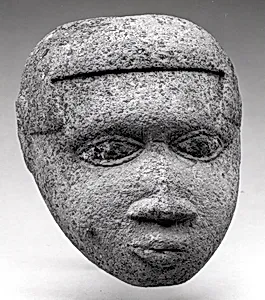
Medium
Terracotta, sacrificial materials, pigment
Dimensions
H. 7 x W. 5 3/4 x D. 4 5/8 in. (17.8 x 14.6 x 11.8 cm)
Classification
Ceramics-Sculpture
Culture
Edo peoples
Department
Arts of Africa, Oceania, and the Americas
Museum
Metropolitan Museum of Art, New York, NY
Credit
Gift of Mr. and Mrs. Klaus G. Perls, 1991
Accession Number
1991.17.8
Rights
Public Domain
Tags
Art Historical Context
This striking terracotta head, crafted by an unknown Edo artist between the 16th and 18th centuries, hails from the Kingdom of Benin in present-day Nigeria. Measuring just 7 inches tall, its compact form belies its profound cultural weight. Made from fired clay enriched with pigments and traces of sacrificial materials, the sculpture exemplifies the Edo peoples' mastery of ceramics, where earthy terracotta served as a durable medium for ritual objects. In Benin society, such heads were vital to ancestral altars, commemorating revered kings (obas) and their queens (iyobas). Placed at the base of shrine figures, they received offerings—evident in the sacrificial residues—that imbued them with spiritual potency. The subtle modeling of facial features, enhanced by faded pigments, conveys regal poise and otherworldly presence, bridging the living world and the divine. Today, this rare survivor graces the Metropolitan Museum of Art, a gift from Mr. and Mrs. Klaus G. Perls in 1991. It invites us to ponder the Edo's sophisticated artistry and enduring reverence for ancestry, reminding visitors of Africa's rich sculptural legacy.