
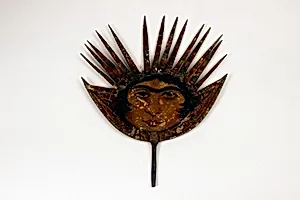
Head for Banner Staff
Unknown Artist
18th century
Dimensions
H. 15 3/4 in. (40 cm); W. 12 5/16 in. (31.3 cm); Wt. 1 lb. 11.2 oz. (771.1 g)
Classification
Miscellaneous
Culture
Persian
Department
Arms and Armor
Museum
Metropolitan Museum of Art, New York, NY
Credit
Bequest of George C. Stone, 1935
Accession Number
36.25.2965
Rights
Public Domain
Tags
Art Historical Context
This intricately crafted *Head for Banner Staff*ails from 18th-century Persia, a period when the Safavid and early Qajar dynasties flourished, blending artistry with martial tradition. Measuring about 15¾ inches high and weighing just over 1.7 pounds, this finial was designed to crown a staff bearing a banner—known as an *alam* in Persian—used in military processions, battles, or ceremonial parades. Displayed in the Metropolitan Museum of Art's and Armor department (bequest of George C., 1935), it exemplifies how Persian metalworkers transformed functional objects into symbols of power and protection. The prominent face motif, hinted at by its tags, likely served both aesthetic and talismanic purposes, warding off enemies or invoking spiritual strength in Islamic Persian warfare. Though the artist remains unknown and the exact medium unrecorded, its compact dimensions and substantial weight suggest skilled forging in steel, brass, or a similar alloy, showcasing the era's mastery of repoussé or chasing techniques for dynamic expression. Such artifacts reveal the intersection of art and arms, where beauty amplified intimidation on the battlefield. Visitors will appreciate how this modest yet evocative piece captures Persia's rich heritage of ornamental weaponry, inviting reflection on the human stories behind historical conflicts.