
Head of a Bearded Man
1564–1644
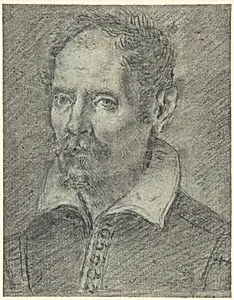
Medium
Black chalk and traces of white chalk on blue paper
Dimensions
4-1/4 x 3-5/16 in. (10.8 x 8.4 cm)
Classification
Drawings
Department
Drawings and Prints
Museum
Metropolitan Museum of Art, New York, NY
Credit
Bequest of Harry G. Sperling, 1971
Accession Number
1975.131.223
Rights
Public Domain
Tags
Art Historical Context
Francisco Pacheco's *Head of a Bearded* (ca. 1564–1644) is a intimate drawing that captures the essence of portraiture in Spain's Golden Age. Rendered in black chalk with subtle traces of white on blue paper, this modest 4-1/4 x 3-5/16-inch study exemplifies Pacheco's skill in quick, expressive sketches. As a master of Seville's artistic scene, Pacheco often produced such heads as preparatory works for larger paintings, honing his observation of human features with economical lines and tonal modeling. The blue prepared paper enhances the dramatic contrast, allowing the black chalk to define deep shadows in the beard and furrowed brow, while faint white highlights suggest form and vitality. This technique, rooted in Renaissance drawing practices, reflects the era's emphasis on naturalism and anatomical precision, bridging mannerism and emerging baroque realism. Though small, it reveals Pacheco's keen eye for character, turning a bearded everyman into a poignant study of age and introspection. Housed in the Metropolitan Museum of Art's Drawings and Prints department through the bequest of Harry G. Sperling in 1971, this work invites visitors to appreciate the artistry behind grand canvases—proof that mastery begins with humble chalk on paper.