
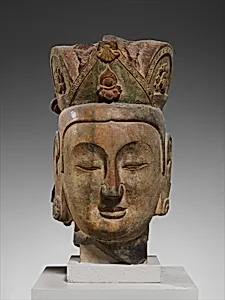
北齊 彩繪石雕菩薩頭像|Head of a bodhisattva
Unknown Artist
ca. 565–75
Medium
Limestone with pigment
Dimensions
H. 32 in. (81.3 cm); W. 17 1/2 in. (44.5 cm); approx. D. 12 in. (30.5 cm)
Classification
Sculpture
Culture & Period
China · Northern Qi dynasty (550–577)
Department
Asian Art
Museum
Metropolitan Museum of Art, New York, NY
Credit
Gift of C. T. Loo, 1951
Accession Number
51.52
Rights
Public Domain
Tags
Art Historical Context
This striking *Head of a Bodhisatt*, carved during the Northern Qi dynasty (550–577), captures the spiritual essence of Buddhist devotion in mid-6th-century China. Dating to around 565–75, it hails from a turbulent era when northern rulers fervently patronized Buddhism, commissioning grand sculptures for temples and caves. Northern Qi art often featured serene, compassionate figures like bodhisattvas—enlightened beings who delay nirvana to aid others—reflecting Mahayana ideals of universal salvation. Crafted from limestone and originally adorned with vibrant pigments, this polychrome sculpture exemplifies the period's technical mastery. At 32 inches tall, the head's full cheeks, almond-shaped eyes, and gentle smile (now partially revealed as paint fades) convey a sense of approachable divinity. The use of color heightened its lifelike quality, drawing worshippers into meditative contemplation. Housed in the Metropolitan Museum of Art's Asian Art department since 1951, thanks to dealer C. T. Loo's gift, this fragment invites us to ponder the splendor of ancient Chinese Buddhist artistry amid political fragmentation. A testament to faith's enduring power, it reminds visitors of art's role in bridging the divine and human realms.