
Head of a Buddha
Unknown Artist
ca. 9th century (?)
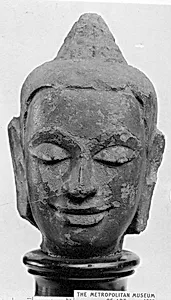
Medium
Stone with remains of lacquer gilding
Dimensions
6 1/4 x 4 in. (15.9 x 10.2 cm)
Classification
Sculpture
Culture
Cambodia
Department
Asian Art
Museum
Metropolitan Museum of Art, New York, NY
Credit
Gift of Frank Vincent, 1885
Accession Number
85.11.11
Rights
Public Domain
Tags
Art Historical Context
This serene *Head of a Buddha*, from stone in Cambodia around the 9th century captures the essence of early Khmer artistic devotion. Measuring just 6¼ x 4 inches, the compact sculpture originally formed part of a larger figure, its smooth contours and subtle modeling evoking the Buddha's tranquil wisdom. Traces of lacquer ging remain, a technique where layers of lacquer were applied and gilded with gold leaf, lending a radiant glow that symbolized enlightenment and divine purity—common in Southeast Asian Buddhist art to make sacred images shimmer like the sun. Hailing from the Khmer Empire's formative period, this piece reflects Cambodia's rich Buddhist heritage during a time when Hinduism and Buddhism intertwined in royal patronage. Such stone heads, often from temple guardians or meditation icons, highlight the era's mastery of durable yet refined carving, blending Indian influences with local vitality. Displayed in the Metropolitan Museum of Art's Asian Art department since 1885, gifted by Frank Vincent, it offers visitors a tangible link to Angkor's spiritual legacy. Though the artist remains unknown, the work's understated elegance underscores the anonymous genius of Khmer sculptors, whose focus on harmony and proportion continues to inspire awe. A quiet testament to faith enduring through centuries.