
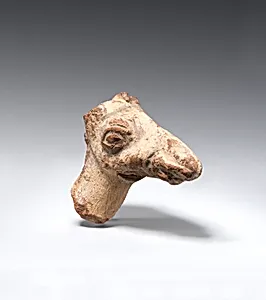
Head of a camel
Unknown Artist
332–30 B.C.
Medium
Terracotta, white slip
Dimensions
H. 4.8 × W. 2.5 × D. 4.8 cm (1 7/8 in. × 1 in. × 1 7/8 in.)
Classification
Head, camel
Period
Ptolemaic Period
Department
Egyptian Art
Museum
Metropolitan Museum of Art, New York, NY
Credit
Rogers Fund, 1932
Accession Number
32.3.343
Rights
Public Domain
Tags
Art Historical Context
This delicate terracotta head of a camel, crafted during Egypt's Ptolemaic Period332–30 B.C.), captures the exotic allure of the era when Greek rulers blended Hellenistic influences with ancient Egyptian traditions. Measuring just under 2 inches tall, the sculpture features a smooth white slip—a thin layer of fine clay applied before firing—to enhance its surface and mimic polished stone, a technique common in Ptolemaic workshops for both aesthetic appeal and durability. Ptolemaic Egypt saw increased use of camels for long-distance trade and military campaigns across the deserts, making them symbols of mobility and commerce in a cosmopolitan world. Small terracotta figurines like this one were likely produced in molds for everyday use—perhaps as votive offerings, toys, or decorative elements—reflecting the period's vibrant artisan traditions and cultural fusion. Acquired through the Rogers Fund in 1932, this piece from the Metropolitan Museum of Art's Egyptian Art collection invites us to imagine the bustling Nile Delta markets where such lively animal portraits brought the ancient world to life.