
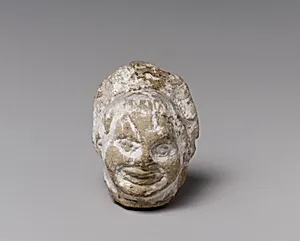
Head of a comic figurine
Unknown Artist
late 4th–3rd century BCE
Medium
Terracotta
Dimensions
H. 1 1/4 in. (3.2 cm)
Classification
Terracottas
Culture & Period
Cypriot · Early Hellenistic
Department
Greek and Roman Art
Museum
Metropolitan Museum of Art, New York, NY
Credit
The Cesnola Collection, Purchased by subscription, 1874–76
Accession Number
74.51.1501
Rights
Public Domain
Tags
Art Historical Context
This diminutive terracotta head, just 1 1/4 inches tall, captures the whimsical spirit of a comic figurine from ancient Cyprus during the Early Hellenistic period ( 4th–3rd century BCE). Crafted by an unknown artist, it likely depicts a theatrical character or grotesque mask, reflecting the lively tradition of comedy in the Hellenistic world, where Greek influences blended with local Cypriot customs following Alexander the Great's conquests. acotta, a fired clay medium favored for its affordability and durability, was ideal for small-scale votive offerings, household decorations, or theater props in the ancient Mediterranean. These figurines often portrayed exaggerated features—bulging eyes, pursed lips, or comic grimaces—to evoke humor and satire, providing insight into popular entertainment and daily life on Cyprus, a cultural crossroads between Greece, Egypt, and the Near East. Part of the renowned Cesnola Collection at The Metropolitan Museum of Art's Greek and Roman Art Department, this artifact highlights Cyprus's vibrant terracotta workshops and their role in preserving Hellenistic whimsy for posterity. A charming glimpse into antiquity's lighter side!