
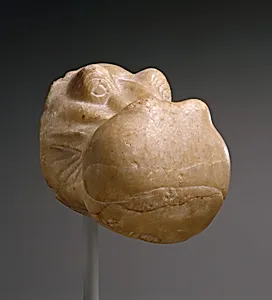
Head of a Hippopotamus
Unknown Artist
ca. 1390–1352 B.C.
Medium
Travertine (Egyptian alabaster) with traces of gesso and red pigment
Dimensions
H. 14 cm (5 1/2 in); W. 12.2 cm (4 13/16 in); D. from back to jaw 15.2 cm (6 in)
Classification
Head, Hippopotamus
Period
New Kingdom
Department
Egyptian Art
Museum
Metropolitan Museum of Art, New York, NY
Credit
Purchase, Harris Brisbane Dick Fund, Lila Acheson Wallace Gift, Gift of Henry Walters, by exchange, Ludlow Bull Fund, Beatrice Cooper Gift, and funds from various donors, 1997
Accession Number
1997.375
Rights
Public Domain
Tags
Art Historical Context
This captivating *Head of a Hippopotamus*, carved around 1390–1352 B.C. during Egypt's New Kingdom (Dynasty 18), offers a glimpse into the artistry of ancient Thebes at the height of imperial power. Likely part of a small sculpture or amulet, its compact size—standing just 14 cm tall—belies its monumental presence, capturing the animal's formidable jaws and alert eyes with remarkable realism and vigor. Crafted from travertine, or Egyptian alabaster, a translucent stone prized for its smooth polish and luminous quality, the piece retains traces of gesso and red pigment, hinting at once-vibrant coloration that brought it to life. Alabaster's softness allowed for intricate detailing, a technique perfected in the New Kingdom for both royal and votive works. Hippos, fierce guardians of the Nile, symbolized both chaos and protection in Egyptian lore—often linked to the goddess Taweret, who safeguarded mothers and children. Housed in the Metropolitan Museum of Art's Egyptian Art department, this artifact evokes the daily perils and reverence of life along the river, reminding us how ancient Egyptians tamed nature's wildness through stone and skill. A testament to their enduring ingenuity!