
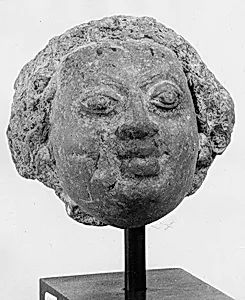
Head of a Male Figure
Unknown Artist
5th century
Medium
Terracotta
Dimensions
H. 3 1/2 in. (8.9 cm)
Classification
Sculpture
Culture & Period
India (probably Uttar Pradesh) · Gupta period
Department
Asian Art
Museum
Metropolitan Museum of Art, New York, NY
Credit
Gift of Sherry and Lawrence Phillips, 1991
Accession Number
1991.457.1
Rights
Public Domain
Tags
Art Historical Context
This exquisite terracotta *Head of a Male Figure from 5th-century India, likely crafted in Uttar Pradesh during the Gupta period, captures the refined artistry of one of ancient India's golden ages. The Gupta era (c. 320–550 CE), often called India's classical age, saw a surge in sculptural innovation, blending spiritual devotion with naturalistic beauty. Sculptors drew from regional traditions like those of Mathura, producing serene, idealized faces that embodied divine harmony—hallmarks of Hindu, Buddhist, and Jain iconography. Fashioned from terracotta, a versatile fired clay medium prized for its accessibility and ability to hold fine details, this small-scale piece (just 3½ inches high) may have served as a votive offering or fragment of a larger devotional statue. The material's earthy warmth and subtle modeling highlight the Gupta mastery of form, with smooth contours and expressive features evoking quiet introspection. Such heads often represented deities, bodhisattvas, or revered figures, reflecting the period's cultural emphasis on dharma and enlightenment. Now housed in the Metropolitan Museum of Art's Asian Art Department, thanks to a 1991 gift from Sherry and Lawrence Phillips, this artifact invites us to ponder the everyday spirituality of Gupta society. Its compact presence belies its profound testament to an era when art bridged the human and the divine.