
Head of a Medusa (?)
Unknown Artist
mid-16th century
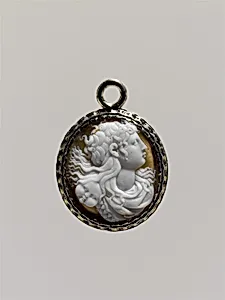
Medium
Onyx or sardonyx, mounted in silver
Dimensions
Overall: 1 1/8 x 15/16 in. (2.9 x 2.4 cm); visible cameo: 22.4 x 20 mm
Classification
Lapidary Work-Gems
Culture
probably French
Department
European Sculpture and Decorative Arts
Museum
Metropolitan Museum of Art, New York, NY
Credit
The Milton Weil Collection, 1939
Accession Number
39.22.12
Rights
Public Domain
Tags
Art Historical Context
This exquisite cameo, tentatively identified as the *Head of a Med*, dates to the mid-16th century and is likely of French origin. Carved from onyx or sardonyx hard, layered stone prized for its contrasting bands of color—it measures just 22.4 x 20 mm, showcasing the miniaturist's extraordinary precision. Mounted in silver, it belongs to the Renaissance tradition of lapidary work where gems served as both jewelry and symbols of refined taste among Europe's elite. The cameo technique involves carefully engraving the stone to exploit its natural layers: the figure of Medusa, with her serpentine hair and fierce gaze, emerges in a lighter layer against a darker background. This method, revived during the Renaissance from ancient Roman precedents, demanded immense skill and patience, often taking weeks for such tiny pieces. Medusa, the Gorgon from Greek mythology whose stare turned men to stone, was a popular motif, embodying both terror and protective power—worn as an amulet to ward off evil. Housed in the Metropolitan Museum of Art's European Sculpture and Decorative Arts department as part of The Milton Weil Collection (1939), this gem highlights the era's fascination with classical antiquity and technical virtuosity. Imagine holding a piece of history that could fit on your fingertip, whispering tales of myth and mastery.