
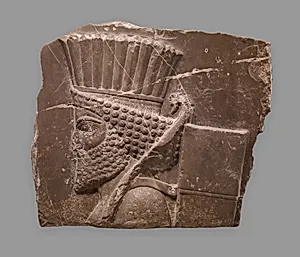
Head of a Persian guard
Unknown Artist
ca. 486–465 BCE
Medium
Limestone
Dimensions
21 1/4 × 24 7/16 × 4 3/4 in. (54 × 62 × 12 cm)
Classification
Stone-Sculpture
Culture & Period
Achaemenid · Achaemenid
Department
Ancient Near Eastern Art
Museum
Metropolitan Museum of Art, New York, NY
Credit
Purchase, Joseph Pulitzer Bequest, 1955
Accession Number
55.121.3
Rights
Public Domain
Tags
Art Historical Context
Behold the **Head of a Persian Guard a striking limestone sculpture from the Aemenid Empire (ca 486–465 BCE), crafted during the reign of Xer I. Measuring 21¼ × 24⅜ × 4¾ inches, this monumental head captures the vigilant gaze of an elite imperial guard, likely one of the famed Immortals—Persia's elite 10,000-strong force that symbolized the empire's might. Housed in the Metropolitan Museum of Art's Ancient Eastern Art department, it acquired through the Joseph Pulitzer Bequest in 1955. Achaemenid art, at its zenith under rulers like Darius I and Xerxes, adorned grand palaces such as Persepolis with processional reliefs and sculptures depicting guards, kings, and tribute bearers. This piece exemplifies that tradition, carved from durable limestone to convey authority and precision. The guard's stylized features—prominent beard, coiled hair, and elaborate headdress—reflect the empire's multicultural fusion of Mesopotamian, Egyptian, and emerging Greek influences, blending realism with symbolic grandeur. As a testament to Persia's vast dominion stretching from India to Egypt, this head invites us to imagine the splendor of Achaemenid courts, where such guardians stood eternal watch. Its survival offers a tangible link to an era of unprecedented imperial power and artistic innovation.