
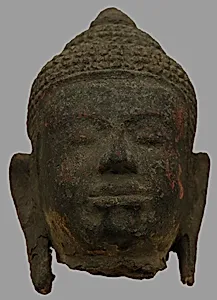
Head of Buddha
Unknown Artist
ca. 12–14th century (?)
Medium
Wood with lacquer and traces of gilt
Dimensions
H. 8 1/2 in. (21.6 cm); W. 5 1/4 in. (13.3 cm); D. 5 1/4 in. (13.3 cm)
Classification
Sculpture
Culture
Cambodia
Department
Asian Art
Museum
Metropolitan Museum of Art, New York, NY
Credit
Rogers Fund, 1923
Accession Number
23.54.1
Rights
Public Domain
Tags
Art Historical Context
This serene *Head of Buddha*, carved in Cambodia around the 12th to 14th century, invites visitors into the spiritual heart of Southeast Asian Buddhist art. Measuring just 8½ inches tall, this wooden sculpture—likely once part of a larger devotional figure—embodies the contemplative ideals of Mahayana or Theravada Buddhism prevalent in the Khmer Empire during its Angkorian heyday. Acquired through the Rogers Fund in 1923, it now graces the Metropolitan Museum of Art Asian Art collection, a testament to the region's rich tradition of crafting sacred icons for temples and monasteries. Crafted from wood and adorned with lacquer for durability against tropical climates, the surface bears traces of gilt that once shimmered like divine light, enhancing the Buddha's ethereal presence. This technique, common in Cambodian sculpture, protected the wood while allowing intricate detailing of facial features—serene eyes, gentle smile, and symbolic urna (forehead mark)—to convey enlightenment and compassion. Though the artist remains unknown, the work reflects masterful carving skills honed over generations. As a cultural artifact, it highlights Buddhism's profound influence in medieval Cambodia, where such heads symbolized meditation and protection. Gaze upon it, and feel the timeless peace it evokes, bridging ancient devotion with modern appreciation.