
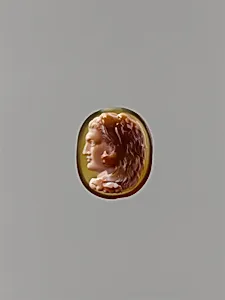
Head of Hercules
second quarter 19th century
Medium
Sardonyx
Dimensions
Overall (confirmed): 1 1/4 x 1 1/16 x 3 5/8 in. (3.2 x 2.7 x 9.2 cm); 32.1 x 26.6 x 9.2 mm
Classification
Lapidary Work-Gems
Culture
Italian, Rome
Department
European Sculpture and Decorative Arts
Museum
Metropolitan Museum of Art, New York, NY
Credit
The Milton Weil Collection, 1940
Accession Number
40.20.37
Rights
Public Domain
Tags
Art Historical Context
Behold the *Head of Hercules*, a cameo carved by Giuseppe Girometti in sardonyx during the second quarter of the19th century. Thisutive gem, measuring just 1¼ x 1 x 3⅝ inches, captures the mythological hero's rugged profile with astonishing precision. Hailing from Rome—then a hub for virtuoso lapidary arts—Girometti, a celebrated Italian engraver, drew on classical antiquity to evoke Hercules' iconic strength and leonine features, as suggested by the work's tags. Sardonyx, a layered chalcedony with contrasting bands of white and darker tones, was the ideal medium for such intaglios and cameos, allowing artists to exploit its natural strata for dramatic relief. Girometti's technique reflects the neoclassical revival popular among Europe's elite during the Grand Tour era, when collectors sought miniature replicas of ancient sculptures as fashionable talismans of erudition. Part of The Milton Weil Collection at The Metropolitan Museum of Art's European Sculpture and Decorative Arts department, this piece exemplifies 19th-century Italian gem craftsmanship. It invites visitors to marvel at how a tiny stone preserves the timeless allure of Hercules, bridging ancient myth and modern artistry.