
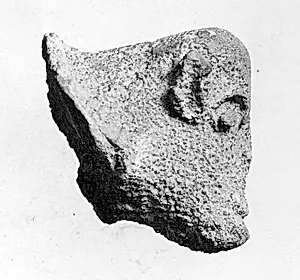
Head of Sheep(?)
Unknown Artist
early 12th century
Medium
Terracotta
Dimensions
1 1/4 x 1 1/4 in. (3.2 x 3.2 cm)
Classification
Sculpture
Culture
Central Asia
Department
Asian Art
Museum
Metropolitan Museum of Art, New York, NY
Credit
Rogers Fund, 1930
Accession Number
30.32.67
Rights
Public Domain
Art Historical Context
Nestled in the Metropolitan Museum of Art's Asian collection, this petite terracotta *Head of Sheep(?)*—measuring just 1 1/4 x 1 1/4 inches—offers a glimpse into the artistry of early 12th-century Central Asia. Crafted by an unknown artist its compact form suggests it may have been part of a larger sculptural ensemble, an amulet, or a votive object, highlighting the region's tradition of small-scale figurative works. Central Asia during this period was a vibrant crossroads of the Silk Road blending influences from nomadic steppe cultures, Persian artistry, and Islamic traditions. Animal motifs like this possible sheep head were common, often symbolizing pastoral life, fertility, or spiritual guardians in daily and ritual contexts. The tentative identification underscores the challenges of studying fragmented artifacts from this era, yet it exemplifies the enduring appeal of naturalistic forms in Central Asian sculpture. Terracotta, a fired clay medium, was prized for its accessibility and durability, allowing artisans to mold fine details with simple tools before kiln-firing. Acquired through the Rogers Fund in 1930, this rare survivor invites us to ponder the hands that shaped it amid the bustling trade routes of medieval Eurasia, connecting us to a world of woolly herds and ancient craftsmanship.