
Head of Shiva
Unknown Artist
ca. 10th century
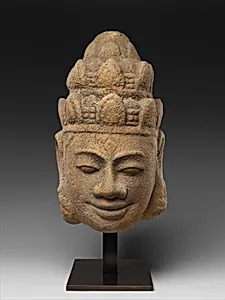
Medium
Sandstone
Dimensions
H. 15 3/4 in. (40 cm); W. 8 5/8 in. (21.9 cm); D. 17 1/2 in. (44.5 cm)
Classification
Sculpture
Culture & Period
Central Vietnam · Chams kingdoms
Department
Asian Art
Museum
Metropolitan Museum of Art, New York, NY
Credit
Purchase, Carol Collins Malone Gift, in honor of Bradley Isham Collins, 2014
Accession Number
2014.520
Rights
Public Domain
Tags
Art Historical Context
Behold the majestic *Head of Shiva*, a sculpture from the Chams of central Vietnam, dating around the 10th century. Carved by an unknown artist, this striking fragment—measuring 15 inches high—likely once crowned a larger devotional statue, embodying the Hindu god Shiva as the cosmic destroyer and transformer. Its presence in the Metropolitan Museum of Art's Asian collection, acquired through a generous purchase in 2014, offers visitors a tangible link to Southeast Asia's ancient spiritual heritage. The Cham people, who flourished along Vietnam's central coast from the 5th to 15th centuries, drew deeply from Indian Hinduism and Buddhism, producing some of the region's most refined stone sculptures. Sandstone, quarried locally, was prized for its durability and workability, allowing artisans to craft intricate details that conveyed divine power and serenity. Shiva's depiction here reflects the Chams' syncretic culture, blending indigenous motifs with Shaivite iconography central to royal temples like those at My Son. This artwork invites reflection on the Chams' artistic legacy, which rivaled contemporary Khmer masterpieces. Though weathered by time, its robust form and cultural resonance continue to inspire awe, highlighting how portable sculptures like this one bridged sacred spaces and modern museums.