
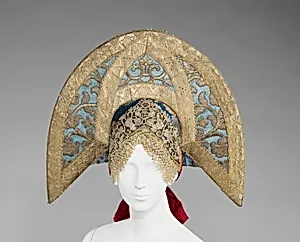
Headdress
Unknown Artist
early 19th century
Medium
silk, glass, semi-precious stones, metal, cotton, mother-of-pearl
Classification
Headdress
Culture
Russian
Department
Costume Institute
Museum
Metropolitan Museum of Art, New York, NY
Credit
Brooklyn Museum Costume Collection at The Metropolitan Museum of Art, Gift of the Brooklyn Museum, 2009; Gift of Mrs. Edward S. Harkness in memory of her mother, Elizabeth Greenman Stillman, 1931
Accession Number
2009.300.1101
Rights
Public Domain
Art Historical Context
Step into the lavish world of early 19th-century Russia this exquisite headdress, a testament to the era's opulent craftsmanship. Crafted by an artist, it features a rich array of materials—silk, glass beads, semi-precious stones metal, cotton, and mother-of-pearl evoke the grandeur of imperial fashion. These luxurious elements were not merely decorative; they signaled wealth and status, often adorning the heads of nobility during courtly events or formal occasions. In Russian culture, headdresses held deep symbolic importance, blending functionality with elaborate artistry to frame the face and elevate social presence. The early 1800s marked a time of neoclassical influences under Tsars Alexander I and Nicholas I, when fashion drew from European Empire styles while incorporating local traditions. Techniques like intricate beading and inlaying with iridescent mother-of-pearl created a dazzling play of light, highlighting the skill of Costume Institute artisans. Now housed in The Metropolitan Museum of Art's Brooklyn Museum Costume Collection (gift of Mrs. Edward S. Harkness in memory of Elizabeth Greenman Stillman, 1931; transferred 2009), this piece invites us to imagine the whispers of ballrooms and the rustle of silk gowns, preserving a slice of Russia's gilded past for modern admirers.