
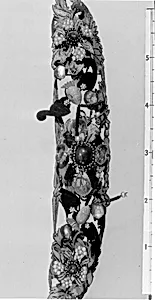
Headdress Ornament
Unknown Artist
18th–19th century
Medium
Gold, feathers, jade, pearls, topaz, carnelian, pink quartan
Dimensions
H. 1 3/4 in. (4.4 cm); L. 7 1/2 in. (19.1 cm)
Classification
Jewelry
Culture
China
Department
Asian Art
Museum
Metropolitan Museum of Art, New York, NY
Credit
John Stewart Kennedy Fund, 1915
Accession Number
15.95.188
Rights
Public Domain
Art Historical Context
This exquisite Headdress Ornament from 18th–19th China exemplifies the opulent craftsmanship of the Qing dynasty, a period renowned for its imperial splendor and elaborate personal adornments. Crafted gold, vibrant feathers, jade, pearls topaz, carnel, and pink quartz, piece measures a delicate 1¾ inches high and 7½ inches long. Such luxurious materials were reserved for the elite, symbolizing wealth, status, and harmony with nature—jade for purity and imperial favor, feathers for vitality, and gemstones evoking the Five Elements central to Chinese cosmology. In Chinese culture, headdress ornaments like this adorned the elaborate hairpins and tiaras of noblewomen during festivals, weddings, or court ceremonies, enhancing beauty while conveying social rank. The intricate integration of organic feathers with polished hardstones and gleaming gold highlights masterful jewelry techniques, likely involving filigree work and precise inlay, which demanded exceptional skill from anonymous artisans in imperial workshops. Now housed in the Metropolitan Museum of Art's Asian Art Department, acquired through the John Stewart Kennedy Fund in 1915, this rare survivor offers a glimpse into the refined aesthetics of late imperial China, where jewelry was both art and identity.