
Heart-Shaped Plaque
Unknown Artist
7th–9th century
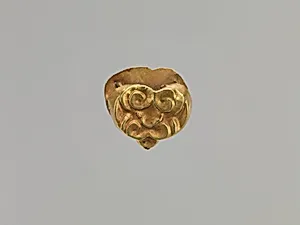
Medium
Gold
Dimensions
H. 5/8 in. (1.6 cm); W. 1/2 in. (1.3 cm)
Classification
Metalwork
Culture & Period
China (Xinjiang Autonomous Region, Central Asia) · Period of Tibetan Empire
Department
Asian Art
Museum
Metropolitan Museum of Art, New York, NY
Credit
Purchase, Friends of Asian Art Gifts, 2003
Accession Number
2003.24.25
Rights
Public Domain
Art Historical Context
Nestled in the Metropolitan Museum of Art's Asian collection, this delicate **Heart-Shaped Plaque is a exquisite example of 7th–9th gold metalwork from China's Xinjiang Autonomous Region in Central Asia. Crafted an unknown artist during the of Tibetan Empire, the measures just 5/8 inch high and 1/2 inch wide—small enough to adorn jewelry or a garment. Its pure gold medium speaks to the era's mastery of precious metal techniques, likely involving hammering, shaping, and possibly repoussé or chasing for intricate details, though its precise form invites wonder about its heart-like silhouette. This tiny treasure emerges from a dynamic period when the Tibetan Empire expanded into Central Asia, fostering vibrant cultural exchanges along the Silk Road. Xinjiang, a crossroads of Chinese, Tibetan, and nomadic influences, produced such finely wrought objects as symbols of status or amulets. The heart shape, rare in ancient Eurasian art, may evoke protective or affectionate motifs, highlighting the region's blend of spiritual and aesthetic traditions. Acquired through the Friends of Asian Art in 2003, the plaque offers a window into the sophisticated craftsmanship of a distant era, reminding us how even the smallest artifacts carry the weight of history's grand narratives.