
Heidelberg
1689
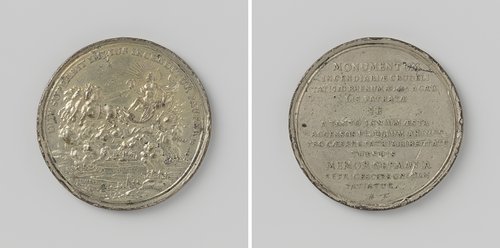
Medium
striking (metalworking)
Dimensions
39.19; 4.7
Rights
Public Domain
About this artwork
Gift of J.M. van Gelder-Nijhoff
Art Historical Context
### Heidelberg by Georg Hautsch (1689) Step into the intricate world of 17th metalworking with *Heidelberg*, a struck medal crafted by Georg Hautsch in 1689. At a modest diameter of 47 cm and weighing 39.19 grams, this delicate piece belongs to the tradition of commemorative medals, which served as portable artworks celebrating cities, events, or patrons. Hautsch, a German artisan of the Baroque era, likely drew inspiration from Heidelberg—a storied university city in the Palatinate region—capturing its architectural or symbolic essence in fine relief. The "striking" technique was revolutionary for its time, using precisely engraved dies hammered against a metal blank (often silver or gold alloy) to produce sharp, detailed images with remarkable efficiency. This method elevated medals from mere tokens to sculptural masterpieces, blending the precision of engraving with the durability of coinage. In late Baroque Europe, such works documented historical moments amid turbulent times like the ongoing wars of Louis XIV. This treasured artifact, a gift from J.M. van Gelder-Nijhoff, invites us to appreciate how small-scale metalwork preserved cultural memory. Marvel at its craftsmanship, a testament to Hautsch's skill in evoking grandeur through miniature form.