
Helmet
Unknown Artist
ca. 1550–1600
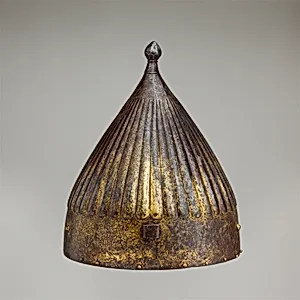
Medium
Steel, gold
Dimensions
H. 11 in. (27.9 cm); Diam. 9 1/2 in. (24.1 cm); Wt. 3 lb. 3.6 oz. (1462.8 g)
Classification
Helmets
Culture
Turkish
Department
Arms and Armor
Museum
Metropolitan Museum of Art, New York, NY
Credit
Rogers Fund, 1904
Accession Number
04.3.213
Rights
Public Domain
Art Historical Context
This elegant Turkish helmet, crafted around 1550–1600, exemplifies the pinnacle of Ottoman and armor during the empire's golden age. Made of robust steel with luxurious gold inlays, it measures 11 inches high and weighs over 3 pounds, designed to shield elite warriors—likely sipahi cavalry—in fierce battles across Eurasia. Its substantial dimensions and weight reflect the practical demands of 16th-century combat, where protection met portability on horseback. The gold embellishments, a hallmark of Turkish metalworking, signify not just wealth and status but also the sophisticated techniques of the period, such as gilding or damascening, which fused functionality with artistry. Helmets like this were status symbols for high-ranking officers, blending Islamic decorative motifs with Persian influences inherited through conquests. Acquired by The Metropolitan Museum of Art in 1904 through the Rogers Fund, this anonymous masterpiece invites us to imagine the thunder of hooves and clash of swords in the Ottoman world, a testament to a culture where beauty fortified bravery.